Justin Allen
About Me
Why I'm Running
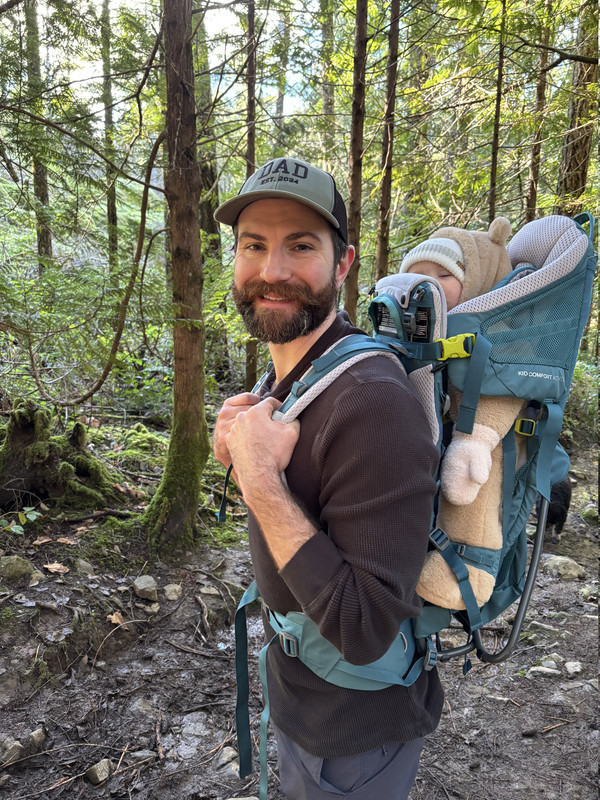
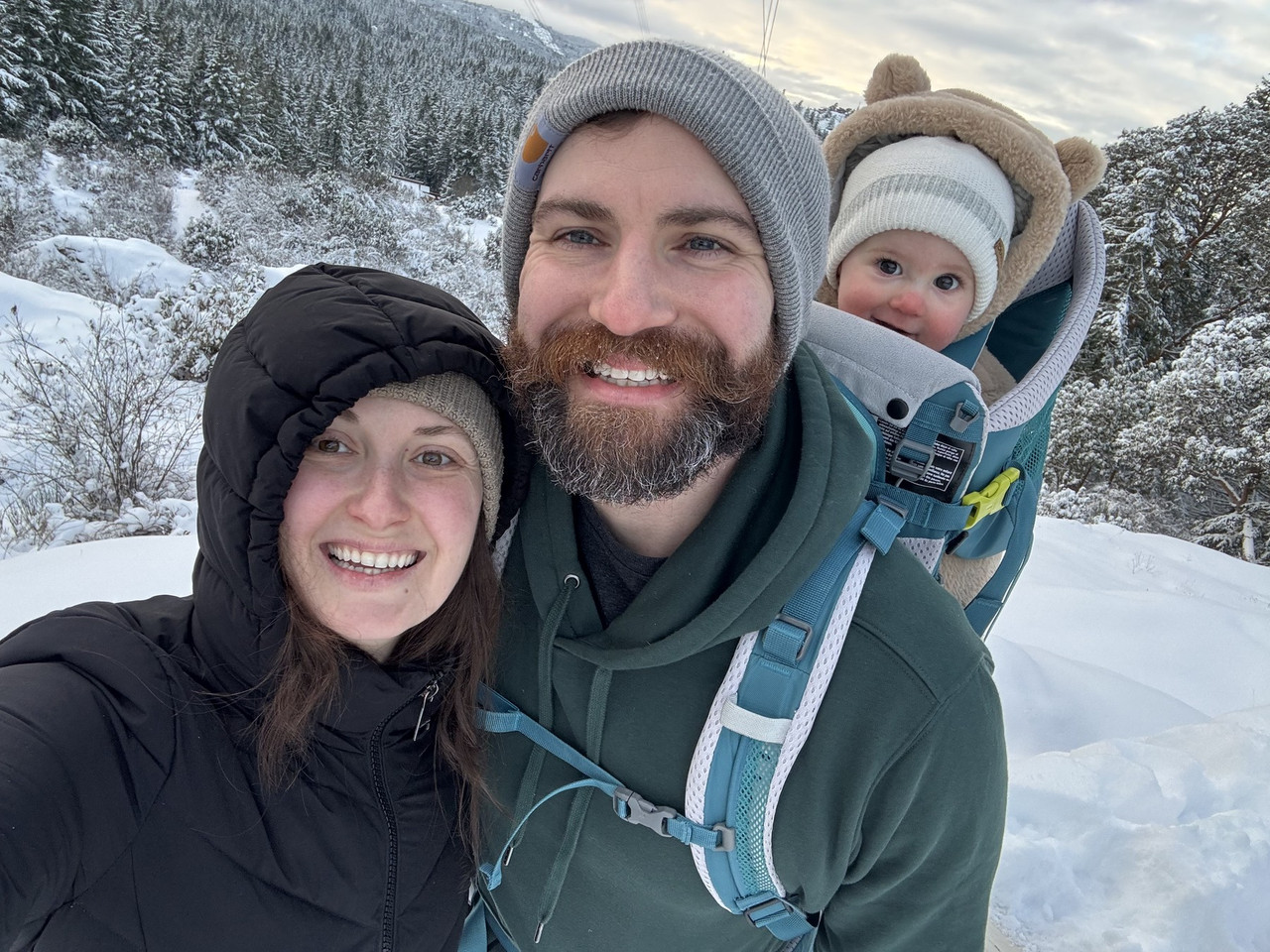
My wife and I are raising our two daughters on the Highlands property where I grew up, which we share with my father. We're building a homestead and growing as much of our own food as we can. That depends on clean water and clean air. We're here for the long haul, and I want the Highlands to stay rural and autonomous, which means becoming more resilient and affordable.
I work in civil engineering consulting — wastewater treatment and on-site disposal, potable water treatment, stormwater management, rural road design. I'm a Project Manager on my firm's leadership team, and an Engineer-in-Training with my P.Eng. application underway. Most of my work is on rural and difficult sites, the same conditions as most of the Highlands.
“The Highlands should keep its rural setting, its pristine environment and its respectful neighbourhoods. That has to be balanced with the ability for families to carve out a safe and fulfilling life by building and maintaining their own homes and properties.”
That work is why I'm running. I see firsthand how well-meant bylaws can force homeowners to replace grandfathered solutions that have worked for decades, and how projects grind to a halt when a reasonable solution doesn't quite meet the specifics of a bylaw. The variance process is expensive, time consuming and stressful. Rigid bylaws often trump logic, lived experience and practicality.
If elected, I'll bring a solutions-focused perspective that makes the Highlands an easy place to build and enjoy life. I'll push for environmental requirements that are clear, prescriptive and affordable, with direct and transparent paths to variance resolution, and for proactive measures to improve safety and protect the aquifer. I'll keep one question at the top of my mind: what burden does it put on us, and at what cost?
I want to work with residents, staff, Council, and the Mayor to resolve long-standing issues, improve resilience and manage finances. We have a lot of talented, ambitious people out here, and Council should make sure the Highlands is a place where all generations can thrive.
Who I Am
I was born and raised in the Highlands, alongside my two younger brothers. I went through school in the Westshore, graduating from Belmont Secondary before heading to the University of Victoria for a BSc in Kinesiology with a Biology minor, then returning later for a B.Eng. in Civil Engineering.
I'm a hands-on person outside of work — my wife and I are constantly working on our home and property, learning how to build a good foundation to raise our children.
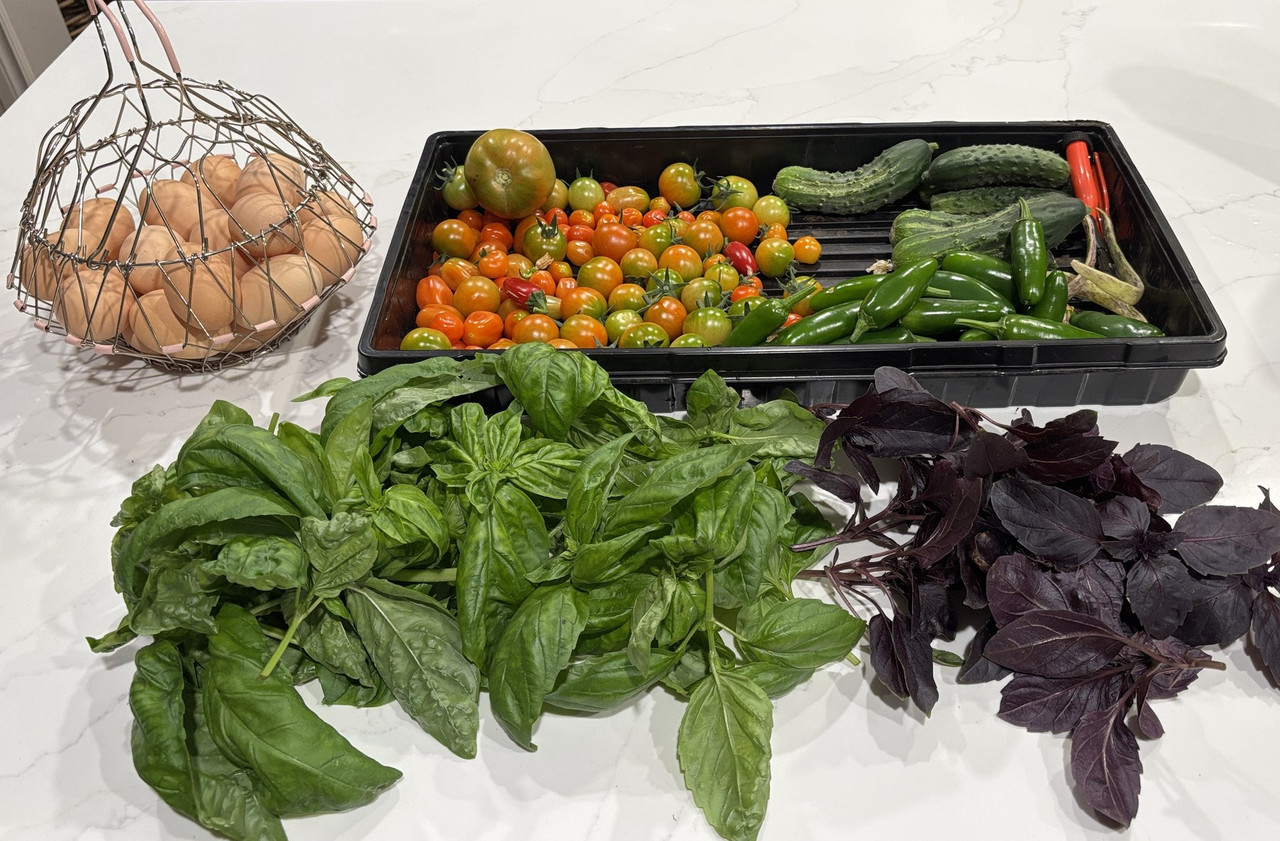
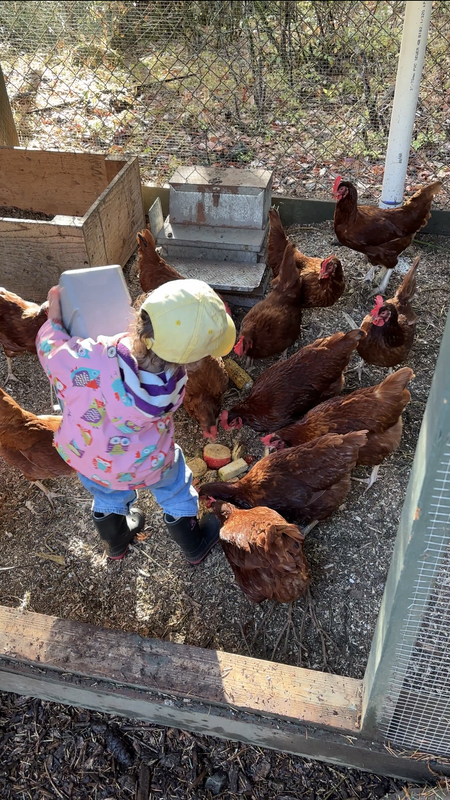
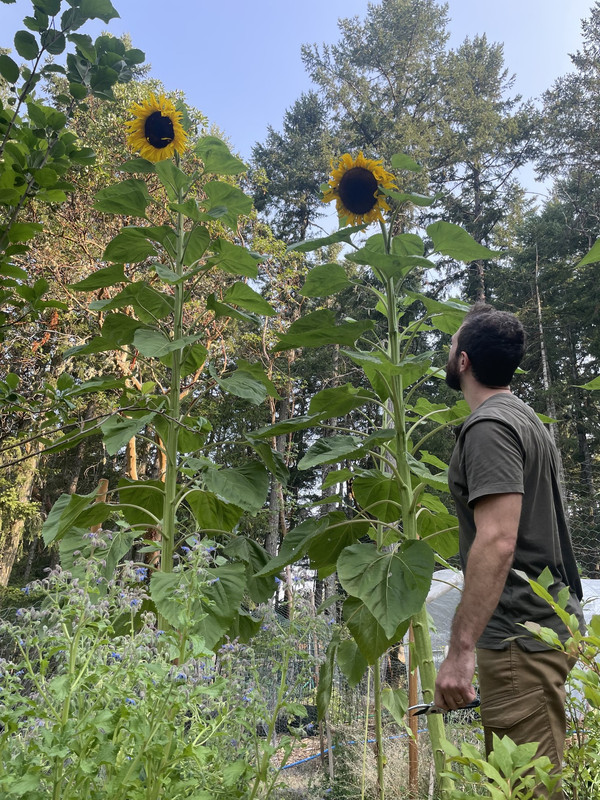
I am passionate about growing real food, and I'm slowly getting better at it — vegetables, chickens, and future ambitions of a goat or two.
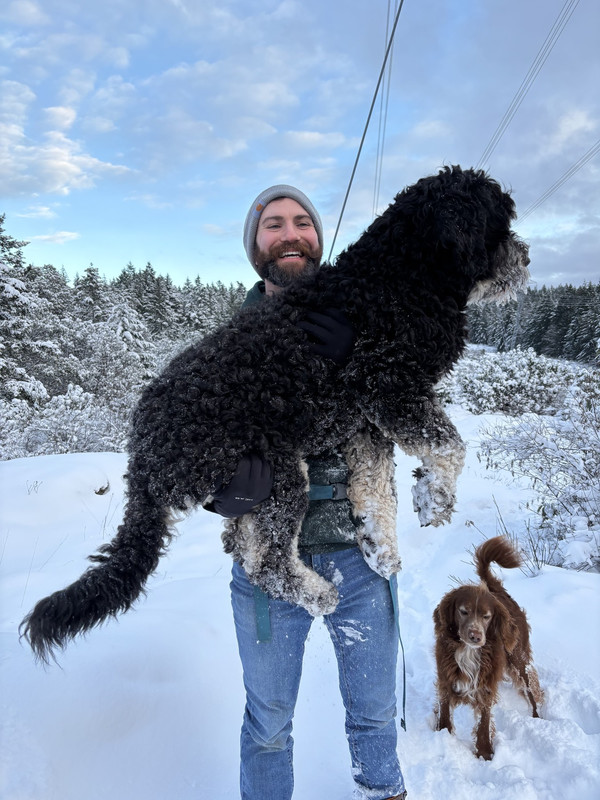
When I get the time, I really enjoy running the trail networks out here with my dogs. And I'm grateful to be able to raise my kids in the forest, to get to build on what my parents started, and to be able to share all the things that I used to do when I was growing up with my family.
Education
Bachelor of Engineering: Civil
University of Victoria | Victoria, Canada
Bachelor of Science: Kinesiology, Biology Minor
University of Victoria | Victoria, Canada
Professional Registration
Engineer-in-Training (EIT), registered with Engineers and Geoscientists of British Columbia (EGBC)
My Platform
Protect the Aquifer
Protecting the aquifer means finding ways to offset the water we draw from the ground, returning what we can back to it, and setting clear guidance to prevent pollution before it happens.
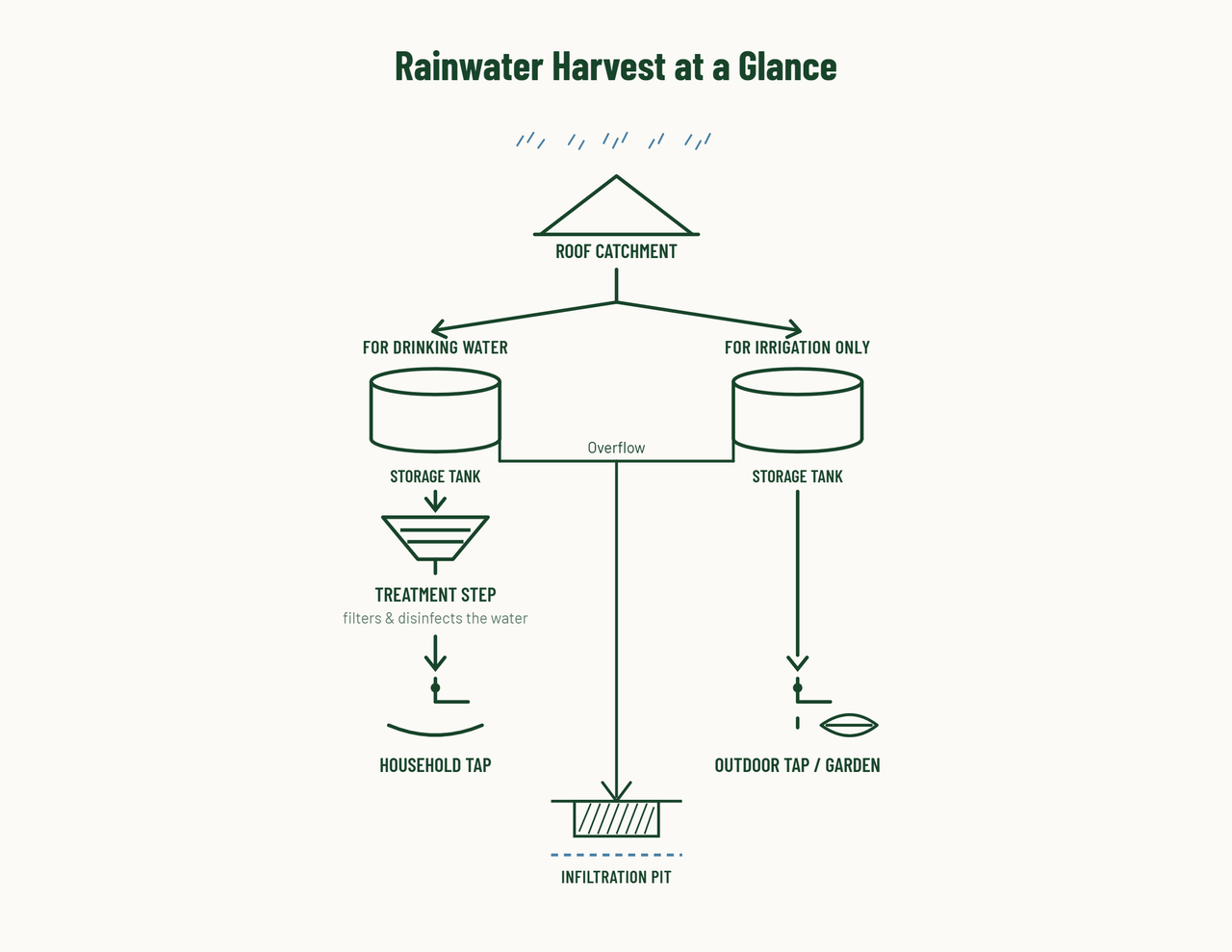
Rainwater For Drinking
- District-published drawings for treating typical rainwater to typical residential demand.
- Treatment system offers an easy pathway to entry and residents can scale storage tanks as needed.
- Source approval for new builds — final water test, just like wells.
Rainwater For Irrigation
- A simpler design for outdoor use only — storage, no treatment.
- A defined overflow returning extra water to the ground through an infiltration pit.
- Less draw on the well for water that never needed treating.
Clear Requirements For Industry
- Buffer distances, monitoring and water quality reporting, written by zone.
- Set out before an application arrives, so residents and applicants both know what to expect.
- Look to existing regulations that do this well — don't reinvent the wheel.
Become Prepared and Resilient
Real resilience and autonomy take proactive effort, and it takes time. Wildfire is a serious threat, and the province is stretched thin — getting prepared here means real peace of mind and there are options and resources available. Encouraging local small businesses adds another layer of resilience, giving the community options when supply chains are stressed.
Water For Firefighting
- Build on Bylaw 154's Schedule C tank drawings with a fuller residential set.
- Concrete and poly options, reviewed with the Fire Department.
- A qualified professional runs the fire-flow numbers first: tank size, homes served, cost per set-up.
- Leverage FireSmart to optimize locations and fill gaps in our fire response capacity.
Rainwater As A Backup
- Treating rainwater to potable standards also gives a home a second water source when the well runs low, and a way to limit the chances that it does.
- Every litre from a tank is a litre left in the aquifer to recover.
- Water discharged to our onsite systems returns to the aquifer.
See also Rainwater For Drinking under Protect the Aquifer.
Local Goods And Services
- What we can make and buy close to home matters most when normal supply is disrupted.
- More families earning locally offers its own kind of resilience.
See also Home-Based Businesses under Expand the Tax Base.
Empower Residents and Improve Safety
Government's role here should be to make your life easier, not harder. And that means helping you ensure your home is safe without punitive threats. FireSmart already gives us a great model: free inspections that flag fire hazards, though the program itself is underfunded. Let's invest in it, and build on the idea — extending it to structural, electrical and plumbing issues, so residents get real information and real resources for genuine life-safety items.
FireSmart, Extended
- Free home assessments could also flag where a fire-storage tank would help most.
- A tank could serve just one home, or neighbours could share one, sized for the highest-flow property.
- The District helps with the cost-sharing agreement.
- Grant applications to help offset the cost.
A Path To Repair And Support
- Many buildings here are older, and some were built before today's rules.
- An initial inspection to flag the critical items.
- Repair at your own pace, or hire a qualified professional.
- Voluntary and on your terms when you can afford it, with support to determine a path to resolve genuine life-safety items.
- A final inspection, with updated plans on file with the District and Fire Department.
- Updated plans on file can mean a fair rise in BC Assessment and taxes on that property — a passive way the tax base grows, with a real benefit to the homeowner too.
A Path To Subdivide Where It Makes Sense
- Bylaw 438 allows a second dwelling, with a covenant keeping it tied to the principal home.
- Revisit that covenant so a second home can stand on its own lot, still meeting Bylaw 154's existing subdivision standards.
- Look at what makes subdividing expensive — the duplicate reserve septic field, and whether potable rainwater could stand in for a drilled well.
- This is about one extra home per lot, not multi-unit development.
Expand the Tax Base, Grow Slowly, Spend Wisely
Growing revenue is critical for covering operating costs and planning for the future — but that doesn't have to mean raising taxes. We can expand the tax base by growing slowly, making it easy and appealing to start a small home-based business, and helping residents increase their own property values. Spending wisely matters just as much — keeping costs in check and making sure new revenue actually goes toward what residents need.
More Households With Roots Here
- A second home on its own lot broadens the base carrying District costs.
- A way for the next generation to own a home here instead of leaving.
Home-Based Businesses
- A clear, published path to run one.
- Farming, honey, mechanics, barbers — the base is already here; make it easier to grow.
- A broader commercial base without a radical change to zoning.
See also Local Goods And Services under Become Prepared and Resilient.
Complete And Resolve SHLAP Efficiently
SHLAP is the South Highlands Local Area Plan — a 2025 addition to Highlands' Official Community Plan covering the Millstream industrial corridor and nearby lands near the Langford border, setting land-use direction for that area.
- Residents deserve to see it finished so they can focus on what matters most to them.
- Keep further consultant spending in check by relying on standards regulators have already set.
- Engage residents early on what the area should become.
Direct, Objective Government Interface
Too often, both residents and the District spend real time and money before anyone agrees on what's actually needed. Let's fix that — clear expectations up front save everyone time, money, and frustration.
Order Of Operations
- Share your plans early, and hear back what's needed to move them forward.
- Requirements and burden of proof understood before consultants are hired.
- Residents brought in early, before an applicant is asked to prove anything.
A Clear Answer
- Where conditions can be set in advance, set them in advance.
- Where something isn't possible, say so early and point to what could work instead.
- Less expense, fewer surprises, and a better experience all around.
My Approach
Working With Mayor and Council
As a first-time councillor, I'll have a lot of learning to do, and I'm looking forward to working with people with years of experience. Other candidates bring great strengths to the table — the ability to run an efficient council meeting, a deep understanding of current bylaws and regulations and their various overlaps, proficiency in asset management, knowing how to land provincial and federal grant money. Little of what I'm proposing can get built without them. I'm looking forward to resolving long-standing issues, bringing solutions to the table, and finding ways to ease the friction between government (the machine) and people.
Working With You
I won't be able to do this from one chair on Council. It will take collaboration with residents, and staff, and negotiation with regulators like Island Health and the Province — their sign-off is usually what actually holds things up. My goal is a genuinely lower-barrier path: cheaper, faster, and less dependence on consultants just to find out what's required, without opening the door to real environmental risk. The process itself is sometimes the actual problem, and I'll push to fix it — not just work around it. Where something's already working, I'll build on it instead of starting from scratch.
Tell Me What Matters to You
I'd love to hear from you.
Tell me what's important to you and give me your comments on what I've proposed. Email me directly at [email protected].
Election Information
All-Candidates Meetings
- Thu Oct 1, 7–9 pm — Zoom (link via HDCA)
- Tue Oct 6, 7–9 pm — In person, Highlands Community Hall
Doors open 6 pm — come early to meet and chat with candidates before the meeting starts
Come out and bring your questions — I'd love to see you there.
Vote
- Advance Voting 1: Wed Oct 7, 8 am – 8 pm, Highlands Fire Department (East Fire Hall), 3613 Woodridge Place
- Advance Voting 2: Wed Oct 14, 8 am – 8 pm, Highlands Community Hall, 729 Finlayson Arm Road
- General Voting Day: Sat Oct 17, 8 am – 8 pm, Highlands Community Hall, 729 Finlayson Arm Road
- District election questions: [email protected] · 250-474-1773